Elizabeth
 Thomas Hill 138C
The steam locomotives designed by Sentinel's continued to be produced well into the 1950's when that firm turned its attentions to diesel traction.
The Rotherham firm of Thomas Hill were Sentinel agents, and they built up a unique business converting Sentinel Steam locomotives to diesel power.
The standard Sentinel design was, of course, eminently suitable for this, being chain driven, and relatively little in the way of modification was required to the chassis to accommodate a new form of power.
138C was one of these conversions.
The locomotives original identity is not known, but it was rebuilt as a diesel in 1965, and part exchanged for another Sentinel steam locomotive at the C.E.G.B. Power Station at Wakefield. The locomotive continued to work at Wakefield until rail traffic ceased there in 1981.
The locomotive was privately purchased and moved to the Middleton Railway in December 1982.
The locomotive is powered by a Rolls Royce C6NFL diesel engine, developing 189 h.p. Drive is by means of a Rolls Royce type CF 10000 torque converter and spiral bevel final drive through duplex roller chains to the four wheels. 138C was vacuum fitted several years ago.
The locomotive was again withdrawn from service in 1996 for repair and improvements.
In 2007 the owner gifted the locomotive to the Middleton Railway before being purchased in early 2015 by Elsecar Heritage Railway.
The locomotive was named "Elizabeth" on 13 May 2015.
Gervase
0-4-0VBT Gervase
Builder: Manning Wardle Rebuilt By: Sentinel Built: 1900 (Converted 1928 to VBT)
Status: Operational
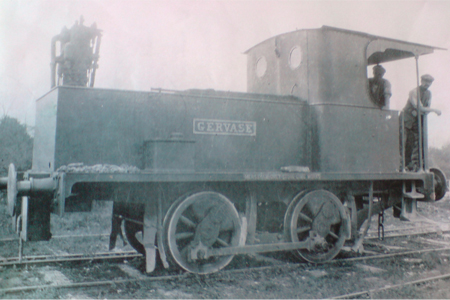
Gervase is a 0-4-0 Vertical Boiler Tank Locomotive. It was originally built by Manning Wardle in 1900 as a small saddle tank locomotive to the conventional 'H' Class design, and it began work at Merstham Grey Stone Lime Works immediately after delivery from the builders. After heavy usage for over 20 years, Gervase was converted to a VBT by the Sentinel Locomotive Co. in 1928. It is in its rebuilt form that it is seen in the archive photo. The drive is transferred from the steam engine to the front axle via chain, with power to the rear axle via side connecting rods.
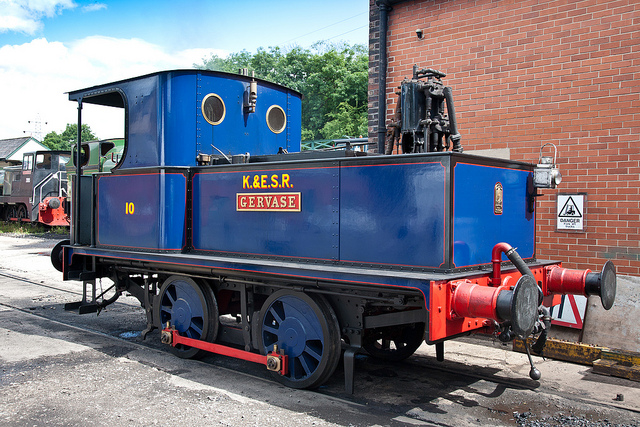
The locomotive has undergone a full rebuild and restoration at Elsecar.
After successful trials, Gervase was used for various events in 2013, which saw a visit to the Great Central (South), and a return to her former home at the Kent & East Sussex Railway.
2014 will see her on tour, with a trip to the Chasewater railway in March.
She has also performed without fault at the head of all of our Steam Santa Specials in 2015.
Louise
No. 6950 0-6-0DH Louise
Builder: Hunslet Engine Co. Weight: 55T Power: 325HP Built: 1967
Status: Operational
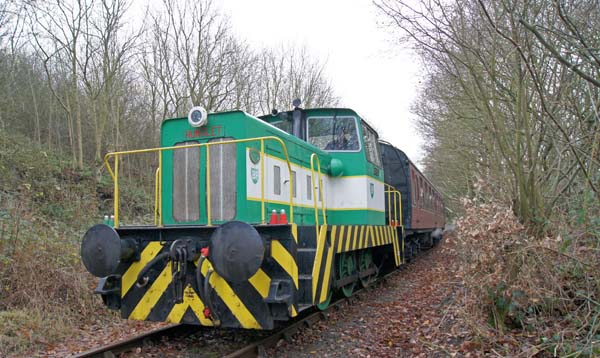
 When built in 1967, this locomotive was first allocated to Hamble Oil Refinery in Southampton. From which it later moved to Mobil refinery on the Isle of Grain. Its final place of work was Coryton Refinery in Essex, where it was only occasionally employed. The loco has a 325HP engine which enabled it to haul heavy oil train formations around the various Oil Refineries. This makes it ideal for use on the steep grades of the Elsecar Railway. The locomotive was fully overhauled and restored over the 2005/2006 period at the BP Loco works at the refinery. It is now being finished as it was originally delivered in 1967, in the BP House colours of green, white and yellow with BP Crests. The locomotive has now been kindly donated to the EHR by British Petroleum. It was named Louise on arrival at Elsecar, and is used on the heaviest passenger trains when a Steam Locomotive is not available. The locomotive was transported to RMS Locotec at Wakefield to receive heavy repairs to its rear axle hornguides during spring 2007. Louise is currently been repainted in the NCB two-tone green livery and receiving work on its gear box.
Earl of Strafford
YEC No. 2895 0-6-0DE Earl of Strafford
Builder: Yorkshire Engine Co. Weight: 34T Power: 250HP
Status: Operational
Built by the Yorkshire Engine Company (Meadowhall), the first use of No. 2895 was as a demonstration locomotive for the YEC. She was sold by the Yorkshire Engine Company in 1965 to McCall's Works in Sheffield. After a spell at the McCall's works she was bought by Shakespeare Simpson and Cook of Tutbury. The Earl's last industrial owner was Redland Steetly Aggregates in Nottinghamshire. She was preserved at the Great Central Railway (Nottingham) and was bought for Elsecar Heritage Railway on 14th March 1997.
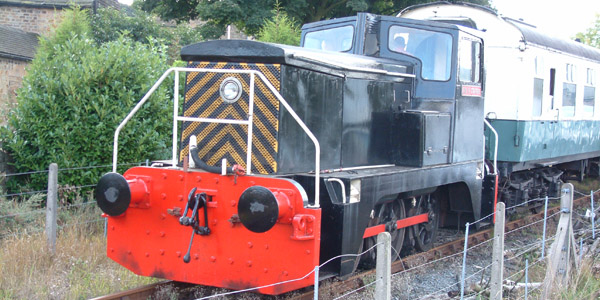
Earl of Strafford was originally fitted with a 6 Cylinder 220HP Rolls Royce Engine, but this was changed to its 6 Cylinder 250HP Supercharged Cummins Power Unit after engine problems. The locomotive was ideally suited to life at Elsecar and became Elsecar Heritage Railway's main workhorse and has been regularly used to haul passenger trains as well as carrying out engineering duties. It can haul all but the heaviest passenger trains at Elsecar unassisted.
Earl of Strafford has now been painted in NCB 1980s blue livery (as would have been seen on the railway at Cortonwood) and is receiving a totally new power plant, expected back in service for Easter 2016.
William
4wVBT No. 9599 William
Builder: Sentinel Built: 1956 Type: 100HP Steam Shunting Engine Weight: 23T
Water Capacity: 660 gallons Rated Boiler Pressure: 220PSI Status: Under Overhaul
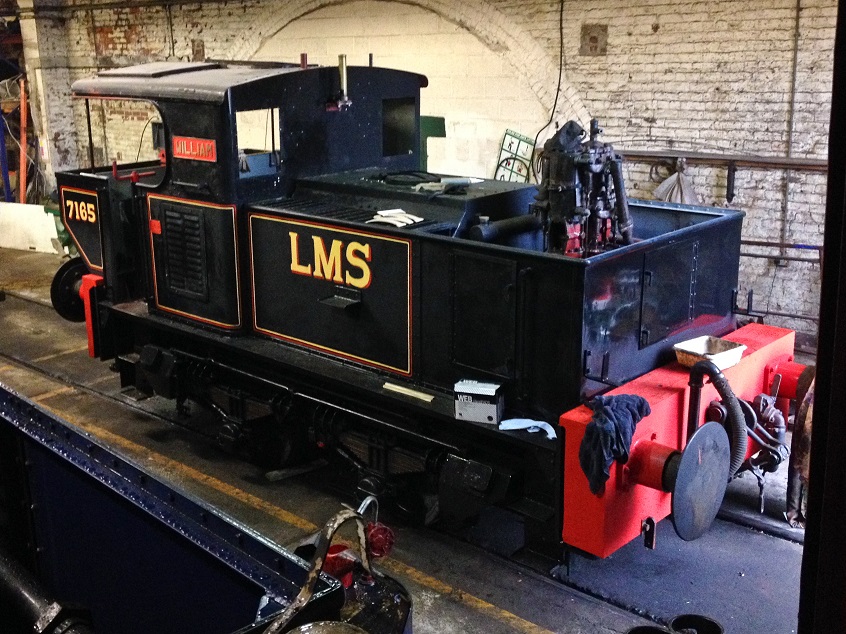
Sentinel No. 9599 William was built in 1956 for Courtaulds Fibres at Great Coates, Grimsby. Originally, the order for William required that the locomotive was able to have its boiler pressurised direct from the main steam supply in the factory itself to reduce the fire risk inside the works. It was delivered new to the factory, and was finished in Brunswick Green with Red buffer beams. The locomotive received the name William in memory of the engineer, Sir William Stannier, who was chief engineer of the LMS Company. Once it had settled into regular revenue earning service, the locomotive was employed hauling wagons' carrying coal, caustic soda and other materials around the plant. At a later date William was joined by another Sentinel locomotive a the plant, No. 9596 George which, by coincidence, also found itself in preservation at Elsecar Heritage Railway for a short period of time. William continued in regular service until 1978 when its duties were taken up by a pair of industrial diesel shunting locomotives. Both the Sentinels remained on site a the works until the 1980s when they were sold for preservation. William went first to Peak Rail, Buxton, and was completely overhauled, rebuilt and returned to service hauling passenger trains. After the Peak Railway relocated to Matlock, the locomotive saw only limited use and was eventually stored. In 1994 the locomotive was bought by a private owner and initially moved to the Middleton Railway Leeds, and was restored to service for a short period, before it was moved to the Battlefield Railway, Shackerstone, in 1996. The locomotive arrived at Elsecar in March 2008, hauling its first passenger train service on 31st May 2009.
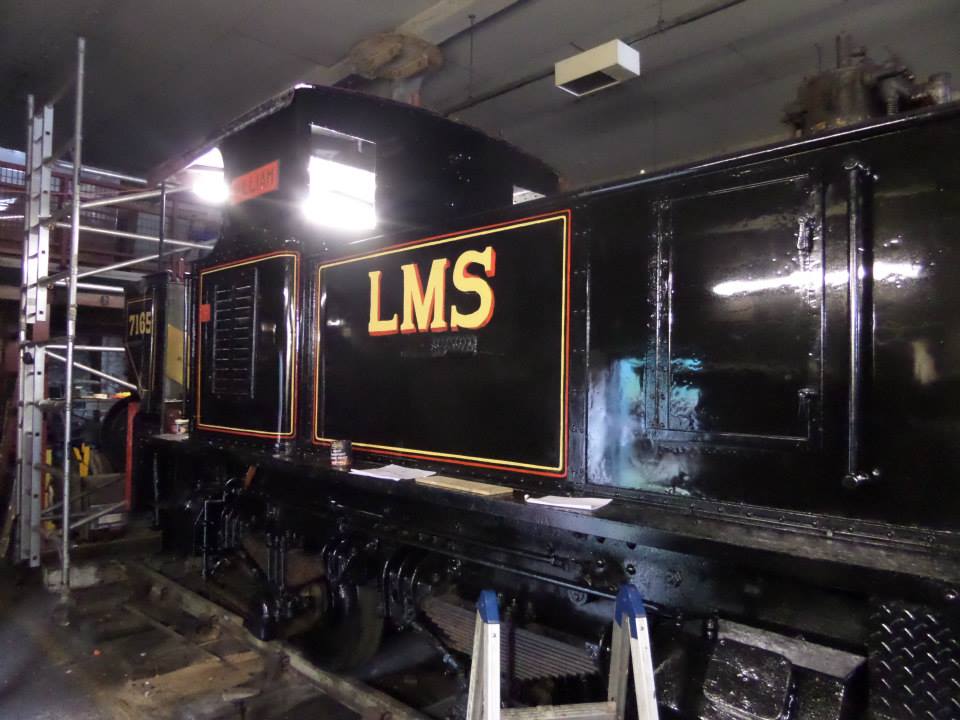
The locomotive is now nearing the end of a further extensive overhaul including new boiler, removal of the tappered front cover and repaint into LMS lined black.
